


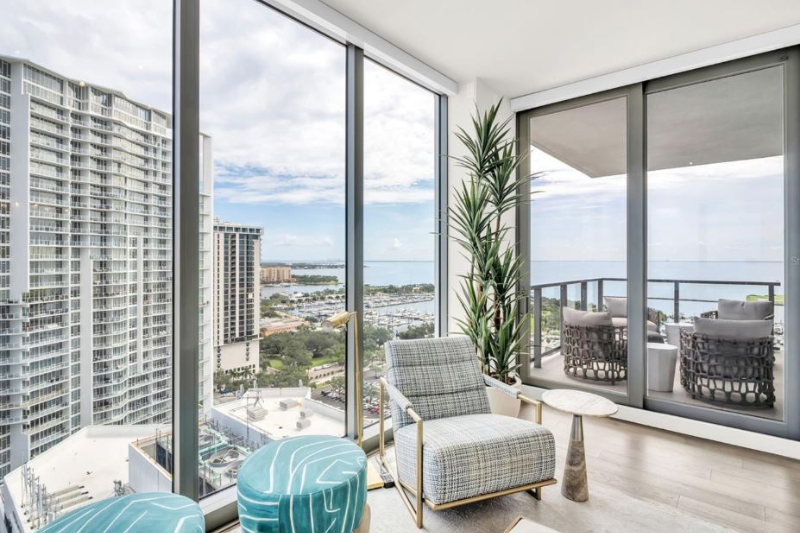
Downtown St. Petersburg Condo Living: What Buyers Need to Know in 2026
Downtown St. Petersburg has changed dramatically in the last decade. A city once defined by its waterfront parks, museums, and historic Central Avenue storefronts now has a skyline that rivals any urban district on Florida’s Gulf Coast.
But for today’s condo buyer, the most important change isn’t simply how high the buildings have risen.
It’s how much more important the building itself has become.
When you purchase a downtown St. Petersburg condominium, you’re buying two things at once: your residence and a share of the community, infrastructure, financial obligations, and decisions that come with the condominium association.
The residence may have the view, the kitchen, and the terrace you fall in love with. But the association is what determines much of what it actually costs and what it may cost you in the future.
That distinction matters more than ever in 2026.
From 400 Central and Art House to ONE St. Petersburg and Saltaire, these are the established towers along Beach Drive and Central Avenue; downtown St. Pete offers an increasingly sophisticated range of condominium living and the new Waldorf Astoria Residences on the Horizon. The challenge isn’t finding a beautiful residence.
It’s knowing which building and which financial and lifestyle profile is right for you.
Downtown St. Pete’s New Generation of Luxury Condos
Several buildings have helped redefine the downtown condominium market. Each offers a distinctly different version of city living, and understanding those differences is an important first step in the buying process.
400 Central
At 46 stories and 515 feet, 400 Central has become the defining presence on the downtown skyline. Developed by Red Apple Group and designed by Arquitectonica, the mixed-use tower combines 301 residences with approximately 58,000 square feet of ground-floor retail and 44,000 square feet of Class A office space.
The building’s signature amenity is its 46th-floor Sky Lounge and Observatory, with sweeping views across Tampa Bay and toward the Gulf. A resort-style pool deck, concierge services, and the integration of residential, retail, and office space give 400 Central a distinctly urban feel.
For buyers who want height, scale, services, and a true city-center address, 400 Central offers a lifestyle that is difficult to replicate elsewhere in St. Petersburg.
Art House
Located at 275 1st Avenue South, Art House brings a more residential interpretation of luxury to the downtown core.
The 42-story Kolter Urban tower includes 244 two- and three-bedroom residences, many with dens, generous terraces, floor-to-ceiling glass, and open layouts. The building’s amenity spaces are equally focused on how people actually live today.
The ninth-floor amenity level includes a fitness and wellness center, resort-style pool, spa, guest suites, game room, and golf simulator. The Hub, a private coworking space, reflects another increasingly important component of luxury condominium living: the ability to work comfortably without leaving home.
Art House is particularly compelling for buyers who want a sophisticated downtown lifestyle but also value generous living space and amenities designed around everyday use.
Saltaire
Saltaire, at 300 1st Street South, occupies one of the most prominent waterfront-edge locations in downtown St. Petersburg, directly across from Al Lang Stadium.
Completed in 2023, the 35-story Kolter Urban tower contains 192 residences and approximately 8,600 square feet of ground-floor retail. It sold out nearly a year before completion, underscoring the demand for a luxury residence in this location.
The building’s Aire Club includes a fitness center, club room, news café, and Olympic-length pool surrounded by landscaped resort-style amenities.
With fewer residences than some of downtown’s newer towers and an especially strong connection to the waterfront, Saltaire appeals to buyers who want luxury condominium living with a slightly more intimate feel.
ONE St. Petersburg
Before 400 Central rose to 46 stories, ONE St. Petersburg defined what a downtown tower could be.
Completed in 2018 at the corner of 1st Street North and 1st Avenue North, the 41-story Kolter Urban tower stands more than 450 feet above the city, with 253 residences, a separate 174-room hotel, ground-floor retail, and structured parking on a full city block. Designed by SB Architects, it held the title of St. Petersburg’s tallest building until 400 Central surpassed it, and it remains one of the most recognizable addresses downtown.
Roughly three-quarters of the residences are oriented east toward Tampa Bay, with the remainder facing west across the city. A 30-foot atrium lobby anchors the 1st and 1st corner, an owner’s lounge overlooks it from the second floor, and the elevated resort deck includes a pool, fitness center, yoga studio, and club and game spaces.
What most distinguishes ONE today is something no rendering can offer: operating history. Every residence sold before delivery, so the building now trades entirely on the resale market, with years of reserves, insurance renewals, assessment history, and board minutes available for review. For a buyer, that is a meaningful advantage. It is also precisely the documentation lenders examine more closely under the 2026 project review changes, which makes ONE a useful illustration of why an established building deserves the same scrutiny as a new one.
The Building Matters as Much as the Residence
It’s easy to compare condos by square footage, finishes, floor height, or water views.
Experienced buyers look beyond those details.
Two residences with similar price tags can have dramatically different long-term ownership experiences depending on the association’s reserves, insurance, rental policies, assessments, maintenance history, and financing eligibility.
That’s why we encourage buyers to evaluate the building before becoming emotionally attached to the unit.
The Real Luxury of Downtown St. Pete? Walkability.
One of the greatest advantages of downtown St. Petersburg condominium living isn’t only inside the building.
It’s what happens when you walk outside.
Central Avenue connects residents to restaurants, galleries, independent retailers, coffee shops, and nightlife. Beach Drive brings waterfront dining and easy access to the St. Pete Pier. The Dalí Museum, Museum of the Arts, James Museum, Mahaffey Theater, and Palladium are all part of the downtown cultural landscape.
And then there is the waterfront itself.
From Vinoy Park and North and South Straub Parks to Demens Landing and Albert Whitted Park, downtown St. Petersburg offers an unusually connected network of parks and waterfront paths.
The Saturday Morning Market adds another dimension to the neighborhood, while the SunRunner expands the car-light lifestyle west toward the beaches.
For many buyers, that ability to leave the garage, walk downstairs, and have an entire city at their doorstep is the real luxury.
Walkability Doesn’t Eliminate the Parking Question
Parking varies by building and residence. Some spaces are deeded; others are assigned. Guest parking can become more challenging during major events, festivals, and peak season.
Before making an offer, confirm exactly how many parking spaces convey, where they are located, whether they are deeded or assigned, and what guest parking actually looks like.
The view may sell the condo. The parking situation can determine how much you enjoy living there.
Before You Buy: Understand the Association
A downtown condominium is also an investment in the association that operates the building.
That makes the declaration, bylaws, rules and regulations, budget, reserve information, insurance documents, meeting minutes, and assessment history just as important as the listing brochure.
Pets
Pet policies vary significantly between downtown buildings.
Some allow multiple pets. Others impose weight restrictions or limit the number of animals. Some distinguish between owner-occupied and tenant-occupied residences or have specific rules about elevators and entrances.
If a pet is part of your household, don’t rely on what a listing says or what someone verbally tells you.
Read the governing documents.
Service and emotional support animals are subject to separate legal requirements, so those situations should be evaluated independently of the building’s ordinary pet policy.
Rentals
Rental restrictions can have an equally significant impact.
Downtown buildings may have minimum lease terms ranging from 30 days to 12 months. Some limit the percentage of residences that may be rented, maintain waiting lists, or require an owner to occupy the unit for a period of time before renting it.
Even if you have no intention of renting today, think about the possibility five or ten years from now.
A residence that works perfectly for your lifestyle today may become considerably less flexible if the association’s rental restrictions don’t align with your future plans.
Rental policies can also matter when it comes to financing, because lenders evaluate the overall characteristics and financial health of a condominium project.
Florida’s Condo Rules Have Changed, and Buyers Need to Pay Attention
Florida condominium ownership has evolved. Legislative changes beginning with Senate Bill 4-D introduced significant requirements surrounding milestone inspections and structural integrity reserve studies. Subsequent legislation has continued to refine those requirements.
For buyers, the important takeaway isn’t memorizing every provision of Florida condominium law. It’s understanding what those rules mean for your monthly costs and your future financial exposure.
Reserve funding for covered structural components can no longer simply be reduced or waived in the way it historically could in some associations. Buildings that previously deferred maintenance or kept assessments artificially low may now need to address those obligations more directly.
That can mean higher monthly assessments. Higher assessments aren’t necessarily a red flag. Sometimes they are evidence that an association is finally funding the building responsibly.
The question is why the money is being collected, how much is already in reserves, and whether the association’s financial plan makes sense.
The Documents Tell the Story
A beautiful lobby tells you very little about the financial health of a condominium.
The documents tell you considerably more.
Before purchasing, we recommend reviewing:
- The current operating budget
- Reserve funding and the structural integrity reserve study
- Milestone inspection reports, when applicable
- The status of any recommended repairs
- Master insurance coverage and deductibles
- Current and pending litigation
- Special assessment history
- Current or anticipated special assessments
- Board meeting minutes
- Rental restrictions
- Pet restrictions
- Parking rights and assignments
One of the most valuable documents in the entire package is often overlooked:
the board meeting minutes.
They can reveal what owners and board members are discussing today and sometimes provide an early indication of what the association may need to address tomorrow.
Insurance Matters More Than Ever
Insurance has become one of the most important pieces of the condominium ownership equation in Florida.
Master policy premiums, hurricane deductibles, flood exposure, wind mitigation, and the overall insurability of the property can all affect association expenses.
Two buildings only a few blocks apart can have very different insurance economics. That’s why comparing condos based solely on the monthly HOA fee can be misleading.
A lower monthly fee isn’t necessarily a better value if the association is underfunded or facing significant future expenses. The goal isn’t the lowest HOA fee. The goal is a financially healthy building with a sustainable cost of ownership.
Condo Financing Changed in 2026
There is another reason buyers need to look beyond the residence itself: condominium financing standards have become more demanding.
Beginning August 3, 2026, Fannie Mae and Freddie Mac changes eliminated certain streamlined condominium project review pathways for applicable conventional conforming loan applications.
In practical terms, more established condominium projects are subject to deeper review of the association’s financial and physical condition.
That review can include reserves, insurance, delinquency rates, litigation, assessments, repair projects, and structural inspection documentation.
And here’s the part buyers need to understand:
Your financial strength does not necessarily overcome a problem with the building.
You can have excellent credit, substantial assets, and a large down payment and could potentially encounter financing issues if the condominium project itself doesn’t meet the lender’s requirements.
There is also another important change on the horizon. Beginning January 4, 2027, the minimum replacement reserve allocation is scheduled to increase from 10% to 15% of budgeted assessment income for applicable projects, subject to the applicable project review requirements and guidance.
For buyers, this reinforces a larger point:
The financial health of the building is now inseparable from the financial health of your purchase.
What Should You Ask Before Making an Offer?
When evaluating a downtown St. Petersburg condo, we encourage buyers to think beyond the residence itself.
- How financially healthy is the association?
- Are reserves adequately funded?
- Are there current or anticipated special assessments?
- What does the insurance picture look like?
- Are there structural or maintenance issues being discussed?
- How restrictive are the rental and pet policies?
- What exactly comes with the residence, including parking and storage?
- Will the building qualify for the financing the buyer intends to use?
And perhaps most importantly:
What could change after I own this residence?
That’s where experienced representation matters.
Why Downtown Condo Experience Matters
Jennifer Thayer Group’s relationship with downtown St. Petersburg extends well beyond traditional resale representation.
Jennifer Thayer began her career in 2005 as the on-site exclusive sales representative for Signature Place, one of downtown’s early luxury developments. She later served as an on-site representative for ONE St. Petersburg, where she was directly involved in selling 67% of the building’s residences.
Members of the team also bring extensive experience from the development side of the business, including more than a decade with Kolter Urban, the developer behind ONE St. Petersburg, Saltaire, and Art House.
That perspective changes the way we evaluate a condominium.
We’ve been on the other side of the transaction, working through contracts, design selections, pre-closing walkthroughs, delivery, and the details that go into bringing a luxury building to market.
We know what questions to ask.
We know which documents matter.
And we know that the most important information about a condominium often isn’t found in the listing.
Since 2018, more than $750 million in real estate has been sold through Jennifer Thayer’s business, with a significant portion of that experience rooted in luxury, waterfront, new construction, and downtown St. Petersburg real estate.
Every client works with a dedicated point of contact backed by the full Jennifer Thayer Group team, combining market knowledge, negotiation strategy, and the depth of experience needed to navigate a complex condominium purchase.
Downtown St. Pete Condo Living Is About More Than the View
There is a reason buyers continue to be drawn to downtown St. Petersburg.
It offers something increasingly difficult to find: a genuine urban lifestyle without giving up the waterfront, parks, culture, restaurants, and sense of community that make St. Pete special.
But buying into that lifestyle requires more than finding the right floor plan.
The right residence matters.
The right building matters more.
If you’re considering a downtown St. Petersburg condominium, whether you’re ready to purchase now, watching the market, or simply trying to understand what today’s changes mean for the value and future of your current property, we’re happy to help you look beyond the listing and understand the bigger picture. Contact us and let’s discuss your real estate goals.
